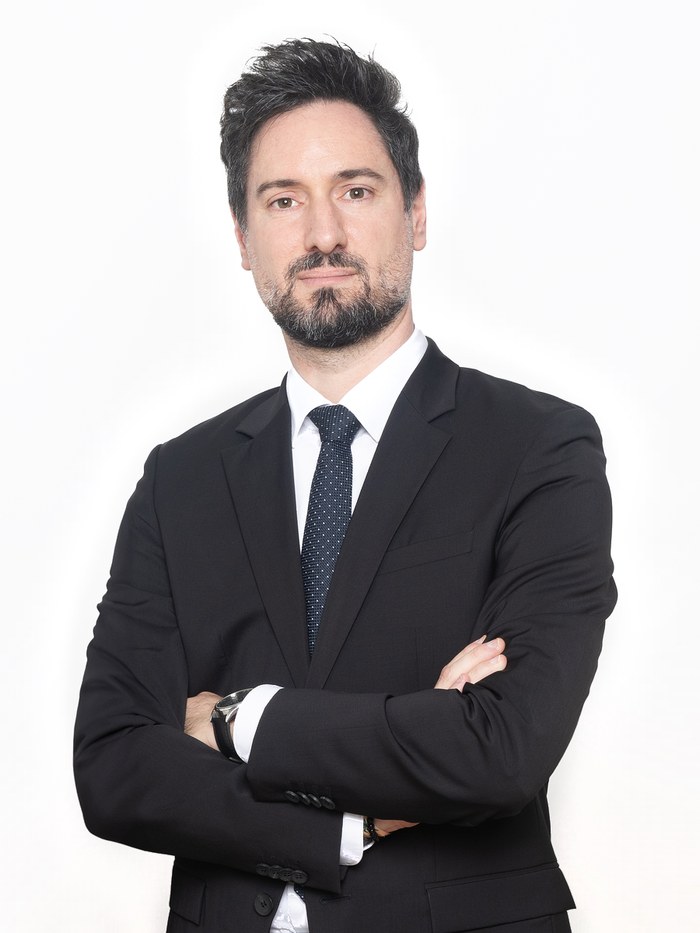
Lawyer
Richard Edo
Corporate and commercialThere are two ways to arrive at a shareholder dispute: without having foreseen it, or having foreseen it badly. Richard has spent years working on the second, which is the more expensive and the more common.
- Practice
- Corporate and commercial
- Based in
- Alicante
- Languages
- Spanish · English
- Works with
- Founders, boards and investors
The approach
Richard heads the firm's corporate and commercial practice. His work begins where many firms consider the job done: in the drafting. Incorporations, shareholders' agreements, investor entries, company sales and corporate governance, guided by a line he repeats in every first meeting: almost every dispute between shareholders was already written, or badly written, on the day of signing. The clause nobody read at the seed round is the one that, five years later, decides who controls the company.
Hence his approach to the document: not as a closing formality, but as the instrument that allocates power, money and exits. Before proposing any wording he will explain what happens if it is complied with and, above all, what happens if it is not.
“A shareholders' agreement is not measured by how well it works while everyone gets along. It is measured by the day they stop getting along.”
The speciality: shareholders' agreements that hold up outside Spain
Much of his research has focused on a problem that is little discussed and very expensive: what happens when a shareholders' agreement signed under one legal system has to be enforced under another. He is the author of the chapter “The enforceability problems of shareholders' agreements in the international legal system. A comparative analysis of common law and continental systems”, within the monograph Práctica del ejercicio de la abogacía y derecho internacional privado de la Unión Europea (Volume III). Special part: International business law, published by Aranzadi and directed by Dr Alfonso Ortega Giménez (Miguel Hernández University of Elche).
The chapter incorporates an economic analysis rarely found in legal literature: quantifying the risk introduced by each clause of the agreement and carrying it through to the company's valuation. Put another way, the discount an investor applies on finding an agreement that is not enforceable. In young companies that discount is not theoretical: it is the price of the round.
On the other side of the investment table
He takes part regularly in forums where the decision to invest is made live. He has spoken at the Investors Day of the international business club Smart Meeting, held at the European University of Valencia, on the panel “Investors. From the pitch to the investment decision”, and at the Science Park of Miguel Hernández University on trends in strategic investment.
He has also been part of a trade mission organised by ICEX in Miami, within eMerge Americas, accompanying Spanish companies entering the United States market. That continued exposure to real transactions is what later shapes the contract: he knows what the investor will look at before they look at it.
New York, Boston and the biotech ecosystem
He has taken part in various events in New York and Boston, the two places where much of the investment in science is decided, and moves regularly in the biotech ecosystem.
That is not a decorative line on a CV. A biotech company is not negotiated like a software company: the value sits in a patent, in a clinical trial half way through, and in a regulatory timetable nobody controls. That changes the whole contract. Ownership of the industrial property, licence agreements, the milestones that release each tranche of funding and the exit provisions all have to be drafted knowing where the value comes from and when it can disappear. Knowing that market's investors, and how they look at a European company, is what allows the question that will come from there to be anticipated in the round here.
Track record
- PresentVeredum Legal & Investment. Head of the corporate and commercial practice.
- ExperienceCo-founding partner and COO at DLC Legal & Investments. Head of operations and of the corporate practice.
- PublicationChapter in an Aranzadi monograph on the international enforceability of shareholders' agreements, with an economic analysis of contractual risk.
- SpeakingInvestors Day (Smart Meeting) at the European University of Valencia and the UMH Science Park, on strategic investment and the investment decision.
- InternationalICEX trade mission in Miami (eMerge Americas), accompanying Spanish companies establishing themselves in the United States.
- BiotechNew York and Boston. Investment events and the biotech ecosystem.
- EducationMiguel Hernández University of Elche and Universitat Oberta de Catalunya.
When to call him
Before signing, not after. And across considerably more ground than shareholders' agreements:
- Commercial contracts that run: distribution, agency, supply, services and licensing. The ones that will govern the next few years, not tomorrow's order.
- International contracts, where the outcome is decided not by the clause but by the governing law, the forum and how a judgment is actually enforced on the other side.
- Development and technology: software commissions, ownership of the code and the data, milestones, warranties and penalties. Who owns what is being built is worth settling before it is built.
- Startups, from beginning to end: incorporation, shareholders' agreement, convertible notes, investors coming in and going out, incentive plans and funding rounds.
- Company sales, restructurings and exits, with the prior review that avoids discovering the contingencies on the buyer's table.
- Shareholder disputes and deadlocked boards, the sooner the better.
And whenever somebody puts in front of you a contract drafted by the other side. That is the cheapest thing to review and the most expensive to fix.